Performing

Musical Meaning and Musicality in Performance

For many years now I’ve found the distinction that Lucy Green makes between ‘inherent’ and ‘delineated’ musical meanings a useful way to think about music. It’s a dialectic between meanings that are created in and by the musical materials themselves (and she draws significantly on Leonard Meyer, another favourite theorist of mine, for this) and meanings that are attributed to music by the culture in which it subsists.

As is often the case with dialectics, the pairing has a way of constantly deconstructing itself on one hand (you find you can access the inherent meanings except through cultural filters, so do the inherent meanings really exist?) whilst still remaining a robust and useful distinction to make. I wrote about this tendency many years ago in an article that engaged with the question of whether the social meanings we find in music are carried within the music itself or simply read into it.

Through years of teaching, I’ve also observed how this distinction provides a useful way to account for how people learn music. (Indeed, I note that Lucy Green is herself a music education specialist – and one of the few who has found a dedicated readership in ‘mainstream’ musicology and music theory.)

Gesture and Song

I’ve written before – both here in my blog and at length in my choral conducting book – about the ideas of David McNeill on speech-accompanying gesture (pdf), and how they can help us understand conducting. But I also find them interesting from the perspective of the singer in performance. Whether and how much to gesture is dilemma that singers routinely face: too much hand movement can be distracting, while keeping the hands completely still can seem unexpressive.

Tone, Articulation & Venue

In a comment on Thursday’s post on the Cheltenham Festival, my friend Sarra remarked on the subject of staccato singing:

… it's possible that in a very echoey space with many singers unused to such an acoustic, and preparing a performance in three days, it might be what you need. Just about.

On reflection it's a bit like running a car with vital bits tied on by string. :)

This reminded me that I’ve been intending to blog someday about the relationship between performance styles and the typical venues in which they’re found. Looks like someday has arrived.

Cheltenham Festival of Performing Arts

Cheltenham Town HallCheltenham Town HallI spent last Saturday afternoon at the choral classes of Cheltenham Festival of Performing Arts. This isn’t the famous Cheltenham Festival that brings lots of big name classical and jazz performers to the town, but the community festival of music, drama and dance with two weeks of competitions for amateur performers. But while it may look more small-time in its level of artistic ambition, it’s still an event that has more than just local interest, attracting entrants from around the South of England and Wales.

Soapbox: Pointing the Finger

soapboxIn Chris Davidsons’s tele-seminar on Successful Speaking Secrets the other week, one of the participants noted as a bad habit of some presenters the mannerism of pointing at the audience. The participant felt that it made them feel like they were being told off. From the speaker’s perspective, the gesture is intended for emphasis; they probably experience it as pointing at an idea that they find important, but the listener experiences it as being pointed at themselves.

Successful Singing Secrets

successfulspeakingOn Tuesday I participated in a teleseminar on Chris Davidson’s book Successful Speaking Secrets Quick Reference, which was published at the end of last year. Chris became a full-time public speaker and speaking coach about 8 years ago, when he could no longer bear the dire quality of most of the presentations he had been witnessing in industry. He has made it his life’s mission to inveigle business leaders of the world into becoming interesting to listen to.

I had a direct interest in the subject as a presenter (and one with opinions, indeed). But I also found myself applying his ideas to the roles of the musical performer and the conductor as we went through. After all, being interesting to listen to is a useful quality for a musician to have, too. My impressions are a little miscellaneous as yet – this post is about rummaging through the plethora of things that caught my attention, but I think there are also a couple of Big Ideas that may emerge as posts in their own right when I’ve had time to live with them for a while.

Eternal Light: A Review

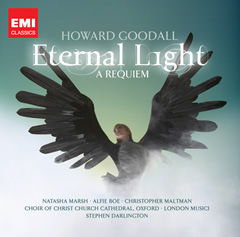
Eternal LightI recently spent an absorbing afternoon getting acquainted with Howard Goodall’s Eternal Light: A Requiem from 2008. The piece was commissioned by London Musici, and was recorded by Oxford’s Christ Church Cathedral Choir some months before its premiere with the Rambert Dance Company. As you might imagine from Goodall’s previous work, it sits squarely in the post-Rutter choral tradition of new music that is accessible to amateur choirs.

On a related theme…

In my recent post about the concept of ‘theme’ as it is used in barbershop culture, I neglected to point out its background. It is a relatively new term in the scheme of things, having been introduced into the vocabulary of the judging system in the 1993 category changes.

Maybe I should take a step back for those who aren’t familiar with the history of the barbershop judging system. Whilst there has been a relatively stable approach since the 1940s in that contests are judged by several people, each of whom has a set number of points to award in a specific category with its own particular focus, the number of categories, their names and their scoring methods have undergone periodic revisions over the years.*

...found this helpful?

I provide this content free of charge, because I like to be helpful. If you have found it useful, you may wish to make a donation to the causes I support to say thank you.


Archive by date

Syndicate content Syndicate content