
Choral

Eternal Light: A Review

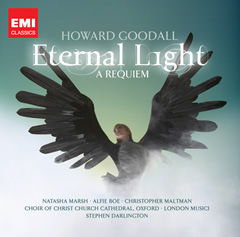
Eternal LightI recently spent an absorbing afternoon getting acquainted with Howard Goodall’s Eternal Light: A Requiem from 2008. The piece was commissioned by London Musici, and was recorded by Oxford’s Christ Church Cathedral Choir some months before its premiere with the Rambert Dance Company. As you might imagine from Goodall’s previous work, it sits squarely in the post-Rutter choral tradition of new music that is accessible to amateur choirs.

Soapbox: On the Value of Metaphors

soapboxMetaphors sometimes get a bit of a rough ride in our scientific world. There is sometimes a sense that talking about, say, voice production in anatomical terms is always and inherently better than what I have heard derided as the ‘pink fluffy cloud school of singing teaching’. Or that precise, concrete performance instructions are more grown-up than expressive imagery. ‘But do you want it louder or softer?’ is the kind of passive-aggressive put-down that players use to tell conductors to stow it with the airy-fairy stuff.

Now, I’m not going to argue against either scientific knowledge or directness of communication. Both of these are Good Things. But I am going to argue that the things they do well do not and cannot replace the things that metaphors do well, and if we replace all our figurative language with literal language, it gets harder to make good music.

There are three things that metaphors do that literal language does not.

National Association of Choirs Conference 2010

Suzi Digby's seminar (featuring a podium from StackaStage)Suzi Digby's seminar (featuring a podium from StackaStage)I spent last Saturday in Stevenage at the National Association of Choirs annual conference. It was the first time I had attended the event, and as I will be presenting at the 2011 conference, it was really useful to go and get a feel for what the membership were likely to find helpful. I had taken a small trade stand to promote my workshops, and was delighted to find that the venue was organised such that the corporate delegates could also go and eavesdrop on the seminars through the day!

Conducting and Common Sense

Greg Beardsell presenting on conductingGreg Beardsell presenting on conductingAt the National Youth Choir’s Young Leaders event the other week, Associate Musical Director Greg Beardsell got some interesting debates going during his session on conducting. He asked participants to position themselves on a continuum between agreement and disagreement on questions such as:

  • Conducting is a skill that can be practised
  • In the UK, choral directors tend to have a lower status than orchestral conductors
  • Conducting is largely a matter of common sense

The National Youth Choir’s Young Leaders

I spent last weekend in North London at the National Youth Choir’s training event for Young Leaders. In anticipation of the courses they will be running around the country this Easter, the weekend’s purpose was to support those making the transition from choir members to staff. There was a real sense of continuum between the more senior staff members providing the training (most of whom had themselves come through the choir to their current responsibilities), through staff members with some experience and those just starting out, to current choir members exploring the possibility of joining the staff in the future.

Mixing Music-readers and Ear-singers

One of the constant challenges the director of an amateur choir is likely to encounter is how to work with a group that includes both people who read music and people who don’t. The two constituencies can have quite different learning styles and preferences, and you want to find learning strategies that work for both.

Managing Stage Fright

At last week’s session of the Inspire Your Choir course I’m running for MusicLeader West Midlands, we had a really fruitful discussion about how to help our singers go into performances calmly and confidently and be happy that they can deliver their best to their audiences. It included lots of practical tips, and gradually three main themes emerged:

Hedonic Adaptation: The Sequel

So, when I wrote about this last December I got as far as articulating the following question:

How do we give our singers enough opportunities for repetition to embed the skills that need automating without dulling their imaginative response to the music?

I have subsequently marshalled some of the thoughts that started to teem in my brain in response. There are several strategies you can take, each of which spawns its own set of rehearsal tactics.

...found this helpful?

I provide this content free of charge, because I like to be helpful. If you have found it useful, you may wish to make a donation to the causes I support to say thank you.


Archive by date

Syndicate content Syndicate content