
Choral

Soapbox: Learning Tracks

soapboxI know the arguments in favour of giving people recordings of the music they need to learn to sing their part in a choral group. It’s a very common practice in the barbershop world, and an increasingly common one in classical choirs. And it’s true that it enables people who don’t read music to participate with very little effort, and indeed to perform much more complex music than they would be able to without it.

And, yes, having people participate in singing is a Good Thing. No argument there.

But still, I do think that every so often someone needs to point out the problems that learning tracks create as well as their opportunities.

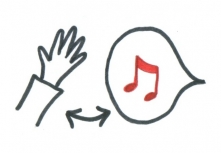
On the Interpretation of Gesture

gesture_voice.JPG
I recently had the pleasure of reading a very interesting dissertation about gender and choral conducting by Michelle Sampson, a recent graduate from Roehampton University. I’m not going to comment just yet on her primary findings since there are plans afoot to publish the study and I don’t want to steal her thunder, but she has given me permission to write about a specific observation that I found particularly fascinating.

Part of the research process involved asking both singers and conductors to comment on video footage of conductors in action (in rehearsal and/or performance). This is what Michelle noted about this process:

123…Come & Sing!

123sing
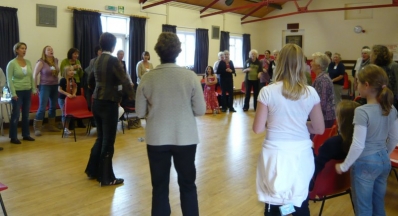
Last weekend saw singing events taking place all over the UK as part of Classic FM's 123sing! project. My contribution to the extravaganza was leading a Come & Sing workshop in Appleton, a medium-sized village in Oxfordshire. The workshop was organised and hosted by Harmony InSpires, the ladies barbershop chorus that rehearses in the next village, and through a combination of leafleting, advertising and word-of-mouth they pulled in a good sized group of participants.

Why a Bad Rehearsal Isn’t Always Bad News

Do you ever have one of those evening where nothing seems to go right? Things that everyone sang with ease the week before sound like they’re sight-reading it upside down; when you gesture to start them singing, they just look at you as if you’ve done something strange and inexplicable; the vocal support sags and the tonal centre strays south.

We can sometimes identify the cause of difficult rehearsals.

How Much Should We Show the Workings?

Going back through my notes from my weekend with the National Youth Choir’s Young Leaders weekend back in March, I was reminded of a good question asked by one of the participants. My presentation had encouraged two principles widely recognized as good practice, but Nat pointed out rather cannily that there was an implicit contradiction between them and asked how to manage it.

Climbing the Greasy Pole

John Bertalot produces a wonderful description of the rehearsal process in his book How to be a Successful Choir Director. He says:

The leading of practices is like pushing a man up a greasy pole. He goes up with a bit of effort, but slides down naturally when you leave him alone.

I like this metaphor not just because it is vivid and surprising – and therefore expressive and memorable – but because it is rich enough to tell us things beyond the immediate message it is presented to convey.

‘Subjective’ vs ‘Objective’ Tone

Archibald Davison's 1940 book Choral Conducting was published 28 years after he took over the directorship of the Harvard Glee Club. In it, he makes an interesting distinction between what he calls ‘subjective’ and ‘objective’ tone. It’s interesting for all sorts of reasons – both because it is a useful distinction to be able to make in working with a choir, and because of the ambiguities present in the way he develops the idea.

It starts off as an aesthetic distinction deriving from the relationship between choral tone and musical intent. Subjective tone, he says, ‘results from and is an inseparable component of the whole musical situation of which it is just a part. It characterizes the text in its varying implications and conveys the singers’ feelings in regard to that text.’ Objective tone, by contrast, is a technical achievement; it is the product of a focus on tone itself independent of musical context.

Are We Having Fun Yet?

A reasonably common point of debate within amateur choirs is whether the point is to have fun or to perform well. For the fun-faction, the requirements of choral discipline (watching the conductor, enunciating the text, not chatting all the time) are frustrating because they dampen the spirits and inhibit people’s enjoyment of a social occasion. For the performance posse, all the chattage and talkery and not following instructions very reliably is frustrating because it inhibits their opportunity for a flow experience and the specifically musical pleasures available from a really clean choral sound.

I suspect there are several things going on within this debate. One is a choral version of the difference in orientation between the people-focused and task-focused that you meet in any walk of life. Some people care about singing with other people because it’s singing with other people, while others are interested in singing with other people.

...found this helpful?

I provide this content free of charge, because I like to be helpful. If you have found it useful, you may wish to make a donation to the causes I support to say thank you.


Archive by date

Syndicate content Syndicate content